

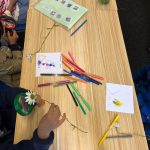
Engaging young children in science is a rewarding endeavor that can spark curiosity and a lifelong love for learning. For 5-year-olds, it is essential to introduce science concepts through playful and exploratory activities that cater to their developmental stage. These activities should be simple, hands-on, and designed to encourage questioning and experimentation. By integrating science into everyday play, children can develop critical thinking skills and an understanding of the world around them. The following sections outline creative science activities that are perfect for 5-year-olds, ensuring that learning is both educational and enjoyable.
Exploring Nature
Introducing young children to the wonders of nature can be an excellent way to foster an interest in science. By observing and interacting with their environment, children can learn about different scientific principles in a practical way.
Nature Walks
- Take a nature walk and collect different types of leaves and flowers. Discuss the different shapes, colors, and textures.
- Encourage children to ask questions about the plants and animals they see.
- Use magnifying glasses for a closer look at insects and plant details.
Participating in hands-on science activities for kids like nature walks can enhance observational skills and provide a foundation for more advanced science experiments for kids.
Simple Science Experiments
Conducting simple experiments can help 5-year-olds understand basic science concepts and develop problem-solving skills.
Sink or Float
- Fill a large container with water and gather various small objects (e.g., a rock, a leaf, a plastic toy).
- Ask the children to predict which items will sink or float.
- Test each item and discuss the results, introducing concepts such as density and buoyancy.
These activities are not only fun but also serve as an introduction to science activities for 5 year olds, helping them grasp abstract concepts through tangible experiences.
Color Mixing
- Use food coloring and water to explore color mixing.
- Provide primary colors and let the children mix them in transparent cups to create new colors.
- Discuss the science of colors and how they combine to form others.
Color mixing activities can also be extended to older kids, making them suitable as part of science activities for 6 year olds and even science activities for 7 year olds.
Interactive Science Workshops
Science workshops offer structured opportunities for children to engage with science in a social and interactive environment.
DIY Science Fair
- Organize a simple science fair at home or in a classroom setting where children can display their experiments.
- Encourage children to explain their projects, fostering communication and presentation skills.
- Invite family and friends to participate, creating a community learning experience.
These workshops are a fantastic way to involve children in science workshops for kids, promoting collaborative learning and peer interaction.
For those interested in more structured learning, consider enrolling in science classes for kids that offer a diverse range of activities and resources tailored to young learners.
In conclusion, science activities for young children should be engaging, exploratory, and educational. By incorporating simple experiments and nature exploration into their routine, children can develop a strong foundation in science that will serve them well throughout their educational journey. These activities can be easily adapted to suit different age groups, ensuring that all children have the opportunity to benefit from a hands-on approach to learning science.
0 Comments