
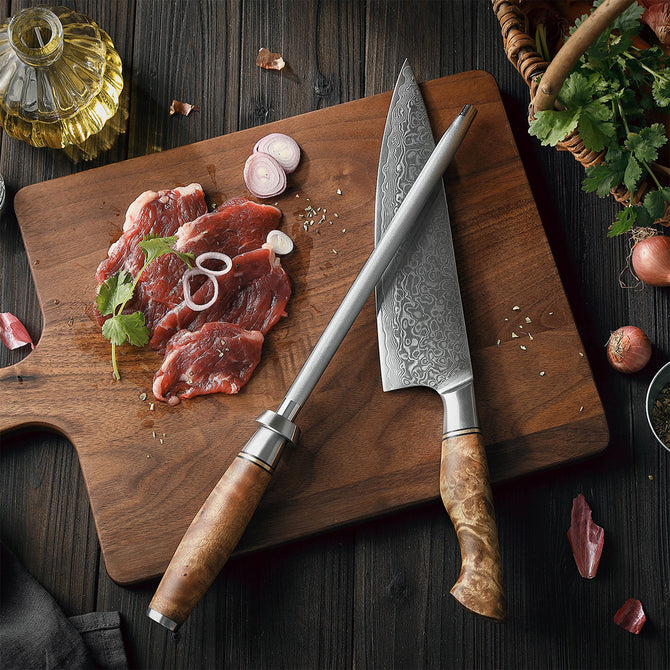
A honing rod is an essential tool for maintaining the sharpness and longevity of kitchen knives. Selecting the right honing rod can significantly enhance the precision and performance of your blades, ensuring they remain in prime condition for culinary tasks. With a variety of materials and styles available on the market, understanding the nuances of each type can aid in making an informed decision. This article delves into the key factors to consider when choosing the best steel honing rod for knife sharpening.
Understanding the Basics of Honing Rods
Honing rods are primarily used to realign the edge of a knife blade rather than sharpening it in the traditional sense. A steel honing rod is a popular choice due to its durability and effectiveness. Here are some key considerations:
- Material: Steel honing rods are made from hardened steel, which is known for its robustness and ability to withstand repeated use.
- Length: The standard length for a honing rod is typically between 9 to 12 inches. Longer rods provide more surface area for honing longer blades.
- Surface texture: The surface of the rod can be smooth, grooved, or diamond-coated. Each type serves a different purpose and influences the honing process.
Find out more about this approach to ensure your knives are always in optimal condition.
Types of Steel Honing Rods
Smooth Steel Rods
Smooth steel rods offer a gentle realignment of the knife blade, maintaining the sharpness without removing any metal. Ideal for frequent maintenance, these rods are perfect for high-quality knives that require delicate care.
Grooved Steel Rods
Grooved rods are designed to provide more friction against the knife blade, which helps in realigning the edge more aggressively. This type is suitable for knives that see heavy use and need more substantial maintenance.
Diamond-Coated Steel Rods
Diamond-coated rods have a fine layer of diamond particles that offer an added sharpening edge, allowing for both honing and mild sharpening. They are often recommended for more robust knives that require a sharper edge.
Discover expert strategies here for selecting the ideal honing rod for your specific needs.
Factors to Consider When Choosing a Honing Rod
When selecting a honing rod, it’s essential to consider the following factors to ensure optimal performance:
- Knife Type: The type of knives in your collection will significantly influence your choice. For example, Japanese knives may benefit from a different rod than Western-style knives.
- Frequency of Use: Consider how often you use your knives. Frequent cooks may require a more durable rod.
- Maintenance: Some rods require more maintenance than others. Consider how much effort you are willing to put into maintaining your honing rod.
Explore advanced guides and tips to maintain your honing rod and knives effectively.
Conclusion
Selecting the best steel honing rod for knife sharpening is crucial for maintaining the sharpness and performance of your kitchen knives. By understanding the different types of honing rods and considering the specific needs of your knives, you can make an informed choice that enhances your culinary experience. For more detailed guidance and tailored solutions, learn about our tailored solutions and ensure your knives are always at their best.
0 Comments